

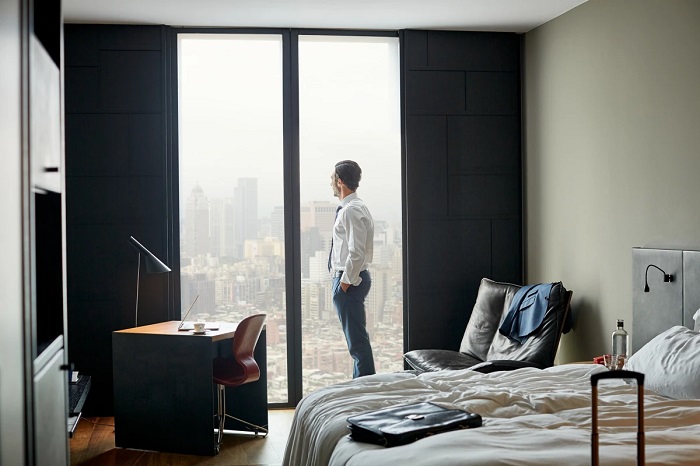
For decades, the standard blueprint for corporate travel was predictable to a fault. A professional boarded a flight, checked into a standardized hotel room, worked late at an undersized desk or on top of a duvet, dined on room service, and repeated the cycle until Friday. While this framework served short, overnight trips well enough, it began showing deep cracks as business operations evolved.
Today, projects rarely adhere to tidy forty-eight-hour windows. Consulting engagements, systems implementations, audit cycles, and executive onboarding frequently require professionals to spend weeks or months on site. For these extended stays, the conventional hospitality model often works against the traveler. In response, enterprise travel programs and independent professionals alike are turning toward flexible accommodation—a shift driven by personal well-being, operational agility, and practical economics.
The Inherent Friction of the Standard Hotel Room
The traditional hotel room was engineered around turnover, not residency. Clocking in at an average of roughly three hundred square feet, the standard room places the bed, the work area, and the entertainment zone within arm’s reach of one another. For two nights, that compactness is convenient. For three weeks, it becomes stifling.
Living out of an open suitcase on a luggage rack disrupts personal rhythm. Without separate quarters for sleeping, working, and unwinding, the physical space offers zero boundary between duty and downtime. Every surface becomes a temporary desk, and every meal eaten off a bedside nightstand reinforces a sense of transience. Over time, this constant friction erodes productivity and contributes directly to the mental exhaustion commonly associated with heavy travel schedules.
Flexible accommodation bridges the gap between the amenities of hospitality and the psychological grounding of home. By providing full residential layouts—complete with private bedrooms, dedicated living spaces, and fully equipped kitchens—these spaces dismantle the boxed-in feeling that leads to road fatigue.
Reclaiming Domestic Rhythm and Daily Wellness
The most taxing aspect of chronic business travel is rarely the work itself; it is the total surrender of personal habits. Maintaining regular sleep schedules, clean eating, and workout regimens becomes remarkably difficult when relying on hotel infrastructure.
Nutritional Control Through Full Kitchens
Dining out every evening ceases to feel like a luxury after the first week. Beyond the cumulative corporate expense, relying entirely on restaurant fare introduces excess sodium, heavy oils, and irregular portion sizes. Flexible living spaces feature operational kitchens equipped with full-sized refrigerators, stoves, cookware, and dishwashers. Having the option to brew your preferred coffee brand, blend a morning smoothie, or roast a simple dinner restores dietary autonomy. For professionals managing food sensitivities or specific athletic diets, this utility alone transforms an assignment from an endurance test into a manageable routine.
Functional Laundry and Storage
The logistics of keeping a business wardrobe fresh during extended deployments usually entails steep dry-cleaning surcharges or hunting down public laundromats on a weekend. Having in-unit laundry facilities eliminates the stress of overpacking and significantly reduces peripheral travel expenses. Similarly, ample closet space allows travelers to unpack fully on day one, shelving luggage out of sight and mentally committing to their environment.
Productivity Beyond the Bedside Desk
High-performing employees cannot produce their best work while hunched over a decorative vanity or balancing a laptop on their knees. A core advantage of serviced apartments and corporate flats is their deliberate attention to functional workspaces.
When an accommodation provides an ergonomic chair, a dedicated desk with proper task lighting, and reliable, high-bandwidth private Wi-Fi, the living space transforms into a legitimate satellite office. Remote collaboration requires privacy for video conferences and confidential client calls—something that cannot be reliably achieved in a bustling hotel lobby or an open-concept coffee shop.
Furthermore, physical separation between the workstation and the sleeping area improves cognitive focus during work hours and facilitates psychological detachment once the laptop lid closes. You do not spend your evening staring at the spreadsheets left open on the corner desk.
Adapting to Fluid Project Timelines
Corporate initiatives rarely conclude on the exact calendar day projected in the initial scope of work. System cutovers get delayed, regulatory audits reveal items requiring remediation, and strategic negotiations extend into unexpected weeks.
Managing these timeline shifts through traditional hotel channels often results in administrative gridlock. Rooms may be booked up by an incoming convention, forcing the employee to pack up and relocate across town mid-project. Nightly rates can surge dramatically due to dynamic pricing algorithms, blowing past the travel manager’s authorized budget.
Flexible accommodation operates on contract structures designed around commercial reality. Providers typically offer scalable agreements with built-in options to extend or contract stays without prohibitive penalties. This flexibility gives operational teams peace of mind: they know their specialists remain comfortably lodged in the same neighborhood for the duration of the engagement, protected from sudden inventory crunches and rate spikes.
Financial Efficiency for Extended Deployments
From a corporate procurement standpoint, long-term flexible accommodations represent a much smarter capital allocation than nightly hotel bookings.
First, the rate structures for extended-stay apartments and serviced residences are inherently tiered; the per-night equivalent drops significantly as the length of stay increases. Second, the ancillary savings add up quickly. Because employees have the means to prepare their own meals, per-diem spending drops without sacrificing employee satisfaction. Add in the reduction of hotel surcharge fees—such as daily parking, resort fees, and garment pressing—and companies frequently realize double-digit percentage savings across multi-week assignments.
Mitigating Burnout and Protecting Retention
Retaining skilled professionals who are willing to travel requires acknowledging the personal sacrifices inherent to the job. Burnout among road warriors is a leading cause of turnover in professional services, management consulting, and technical implementations.
When organizations prioritize livable, private spaces over sterile hotel rooms, they signal genuine respect for the human behind the job title. Travelers feel supported rather than spent. Moreover, flexible accommodations make it far easier to accommodate the occasional visit from a partner or family member over a weekend, softening the sting of long separations and turning an exhaustive deployment into a rewarding professional chapter.
As distributed teams and project-based assignments continue to define modern enterprise, the environments where employees recharge will matter as much as the tools they use to work. Flexible accommodation is no longer an occasional alternative for fringe scenarios; it is becoming the foundational infrastructure for sustainable corporate mobility.