

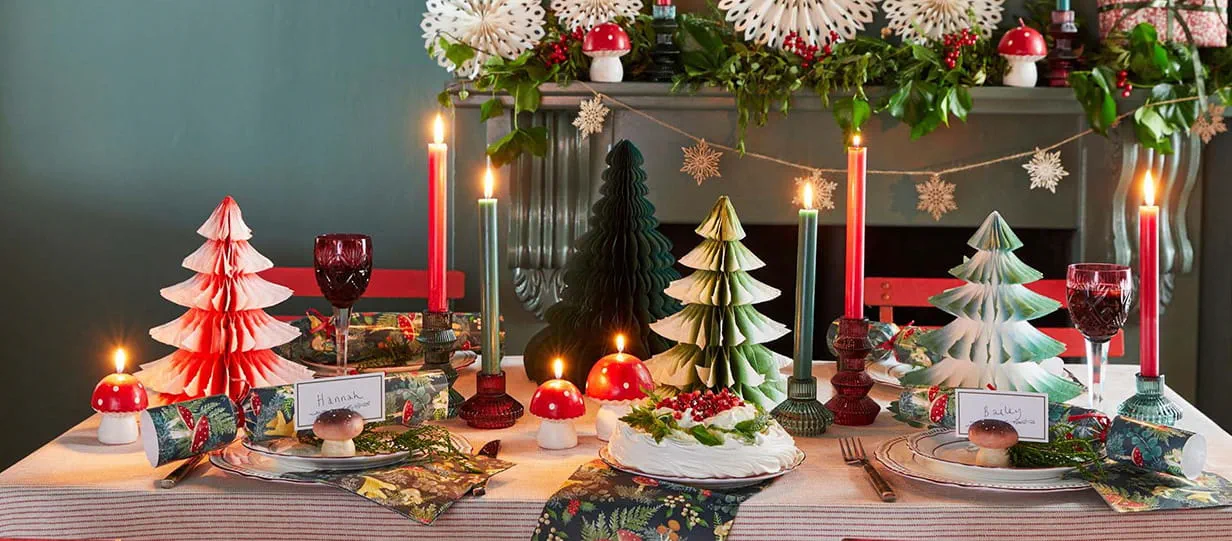
A welcoming Christmas table combines practical place settings, comfortable lighting, and decorations that mean something to your family. Start with one simple centerpiece, leave enough room for serving dishes, and add personal touches that help guests feel at home.
You do not need matching dinnerware or an elaborate display. A thoughtfully arranged table can make Christmas dinner feel special while keeping the focus on the people gathered around it.
Choose a Christmas Table Theme Before Buying Decorations
A clear theme makes decorating easier and helps you avoid buying pieces that do not work together. Choose two or three colors, then repeat them through your napkins, centerpiece, and small decorative details.
For a traditional Christmas table, try green, cream, and gold. A coastal-inspired setting might combine white linens, natural textures, and muted blue accents. Red berries and dark green foliage create a warmer, more classic appearance.
Use your existing plates as the starting point. Plain white dinnerware works with almost any palette, while patterned dishes usually look best with simpler linens and fewer accessories. The goal is a coordinated table that still feels relaxed enough for a family meal.
Build a Meaningful Christmas Centerpiece
The best Christmas centerpiece gives the table a focal point without making conversation difficult. Keep decorations low enough for guests to see one another comfortably.
A small nativity scene can bring the Christmas story into your celebration. Holyart is one place to explore Christmas decorations and nativity sets, but check each piece’s dimensions carefully before choosing a display for your dining table.
Arrange the scene on a shallow tray to make it easier to move when food arrives. Add a few sprigs of greenery around the base, leaving delicate figures clear of serving areas. If your table is narrow, place the main display on a nearby sideboard and repeat one of its colors on the table.
Use Greenery Without Crowding the Table
Greenery adds texture and helps connect individual decorations. A few small arrangements often work better than a thick garland running the entire length of the table.
Place short stems in small vases, tuck a sprig beside each place card, or arrange greenery around battery-operated candles. Keep loose leaves away from food and check that any plants you use are appropriate around children and pets.
Artificial greenery can be useful if you want to reuse your decorations or prepare the table in advance. Look for pieces with a natural shape rather than adding so much foliage that guests struggle to find space for their glasses. Avoid strongly scented decorations near the meal, where they may compete with the food.
Make Each Place Setting Feel Personal
A personal detail can make an ordinary place setting feel thoughtful. Handwritten name cards are an easy option, particularly when guests do not all know one another.
You could also place a short Christmas message beside each napkin. Keep it warm and simple, such as a wish for peace, gratitude, or a happy year ahead.
For a family gathering, invite children to draw the place cards. Their artwork adds character and gives them a role in preparing the celebration.
Small ornaments can double as table decorations and take-home keepsakes. Choose items that suit your guests, and avoid placing fragile pieces where they could easily fall.
Choose Lighting That Makes Guests Comfortable
Soft lighting creates atmosphere, but guests should still be able to see their food and move around safely. Combine your usual room lighting with a few smaller points of light.
Battery-operated candles are practical for crowded tables and homes with young children. If you prefer real candles, use stable holders and keep flames well away from napkins, greenery, and reaching hands.
Avoid tall arrangements that put flames near guests’ faces or hair. Unscented candles are usually the most comfortable choice during dinner. Set up the lighting before guests arrive so you can check for glare, dark corners, and decorations that block the view.
Plan for Food, Children, and Conversation
A beautiful table should support the meal. Before finishing your decorations, place empty serving dishes on the table to see how much space they need.
If the setting feels crowded, serve food from a sideboard or kitchen counter. Keep water, frequently used condiments, and essential utensils within easy reach.
For younger guests, use sturdy cups and simple place settings. A small activity card or paper placemat can help keep children occupied between courses. Think about seating, too. Leave enough room for guests to pull out their chairs comfortably, especially if someone needs extra space or assistance.
Decorate With a Budget and Reuse in Mind
Before shopping, gather the linens, vases, ornaments, and candleholders you already own. Try a few arrangements and photograph them to see which feels most balanced. Spend on pieces you can use again, such as washable napkins or a versatile centerpiece. Borrowing extra dinnerware can also be more practical than buying a complete matching set.
A welcoming Christmas table does not depend on how much you spend. Choose a meaningful focal point, make room for the meal, and add one personal detail that reminds guests they are welcome.