

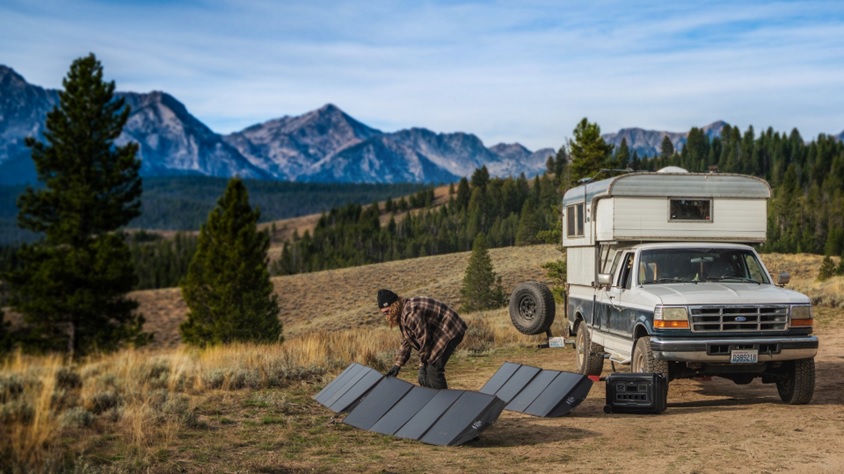
We’ve all been through it. The constant search for a higher watt-hour power station than the last one, right? 300Wh, 700Wh, 2,000Wh more, is always better, no? Not always. You can get the power station with no power at all and end up with nothing to power your devices during your trip. Or you can get the most powerful power station you can, and haul around a 20 kg battery pack which you’ll barely use a tenth of. Don’t worry, in this guide we’re going to show you how to calculate the power station capacity according to the devices you want to power.
Start With Watts, Not Marketing
There are two main criteria, which describe each power station: the first is the capacity, the second is the capacity. The first is in watt-hours (Wh) and shows how much electricity the power station will accumulate. The second is in watts (W) and describes how much energy can be supplied at a time. In the power stations, manufacturer SOUOP Power these parameters are indicated in the technical specifications. This means that when choosing the right device, pay attention to both of these values. For example, a large capacity means that the device will provide power longer, but at the same time, such a power station can not power a device that has a lot of power, for example, a kettle or small water pump at the same time. Capacity is like a gas tank, and power is like an engine. Accordingly, the more technical devices you use, the less room you have for the capacity of your battery.
Do the Weekend Math
A Camping Power Station just supplies the power you require. So make a list of every device, its power use (watts) and the number of hours you plan on using it. Next calculate the watt-hours (watts times hours) of each appliance and then sum the values. Include 20% for inverter losses.
So this starts to stack up for a weekend trip, with two people. Two phones, fully charged twice (say 15Wh each time) comes to 60Wh used on the camping power pack. An LED lantern (8W) running for four hours per night for two nights adds another 65Wh. Two sets of camera or drone batteries (50Wh each) totals 100Wh. A laptop (50W) running for three hours per day over three days is 300Wh. The big ticket items: the 12V compressor fridge (45W pull at the average while it cycles on and off) 48 hours is 500Wh; an electric blanket (60W) operating for five hours per night is 600Wh.
Combine those, and a rampaging weekend reaches around 1,600Wh, while the journey without the blanket and fridge is below 600Wh. It’s the fridges and heaters that increase the numbers, the rest barely budges.
Three Common Camper Profiles
- The limited (200 to 500Wh). You are car camping with a couple of phones, a headlamp, and a basic speaker and/or camera. You will not need a lot of power and a small (300 to 500Wh) unit will be just right
- The comfort camper (500 to 1,000Wh). You throw in a 12V fridge, some string lights, a laptop for your nightly movies, and a fan. This is the ideal size for the majority of weekend warriors, and a 700 to 1,000Wh station will handle it.
- The basecamp host (1,000 to 2,000Wh). You’ve got a full camp kitchen, induction stove, electric blanket, projector, and the kids’ tablets. You’ll need a larger battery with a high-capacity inverter (preferably 1,500W or more).
Watch the Output Rating
Capacity’s fine, but it’s the output that will dictate the number of times you’ll be starting that inverter generator. A 500Wh capacity battery with a 300W inverter certainly won’t run a 600W coffee machine. Calculate the maximum load of whatever it is you’re looking to power, and be sure that the inverter’s continuous output rating exceeds that comfortably.
Check the surge rating as well, because when a motor or compressor first starts there may be an initial surge of two or three times the watts and a decent inverter will be able to absorb that short term load without disconnecting.
Don’t Forget Weight and Portability
Capacity is adequate, but the deciding factor for how often your inverter generator is running will be output. A 500Wh battery with a 300W inverter definitely cannot run a 600W coffee machine. Calculate the maximum load of the device that you intend to power and check that the continuous power of your inverter is significantly more than this. Don’t forget to check the surge rating either when a compressor or motor starts up for the first time, its power demand can be two or three times higher and a good-quality inverter should not only be able to tolerate the very high loads but also not get disconnected due to overload protection.
Can Solar Panels Close the Gap?
Solar Charging: A great way to charge a small unit is by using solar energy. A 100W sun panel, on an average day, can supply you with 300-400Wh of solar charging power. Your charging time may vary somewhat according to cloud cover, direction and shade. For weekend travel or even an outing, solar power would be more an aid than the main source of power. Unless you need to run a fridge, you probably do not need solar power at all. However, if running the fridge is essential, you need to have at least a 100-200 watt solar panel connected to over 700 watt-hours to continuously supply power to the fridge and keep it cool throughout the weekend. The rule of thumb is to fully charge your station to 100 % before a trip. Also, remember solar charging is not a method of going to zero percent.
Choosing a Reliable Brand
.After you have settled on your size needs, the next step is to research the manufacturer. Production techniques, certifications, warranties, policies and customer service capabilities are all critical just like the specs when you are at a remote location without a service center.
This company is handled by Shenzhen Kerui Power Storage Co., Ltd. The company deals in portable power station and home backup power products including solar generators and power stations.
If the vendor is a company that makes both outdoor and indoor UPS (uninterruptible power supply) systems, they should have a good understanding of how different loads perform, which could be useful when deciding on which type of multi-purpose device is best for your camping trips as well as during local power outages.
A Quick Rule of Thumb
If you’re too lazy to do the maths, here’s the exception table. If it’s a phone, light and small stuff, 300-500Wh will suffice. 12V fridge or laptop, choose between 600-1000Wh. Include camping, heating, multiple persons gear and you’re at 1200Wh+. If you will be using it for longer trips, in cold conditions (discharging of battery doubles at 0°C) or sharing with your friends, better to round it up a bit.
Final Thoughts
The perfect power station isn’t the largest one on a shelf or even the one with the highest specs. Your gear, the total duration of your trip, and the type of your travel with the gear should determine the choice. Spend about five minutes, calculate the energy needs, compare capacity and output and give yourself a 20% buffer. After that you can just enjoy the campfire without keeping your eyes on the battery level.