

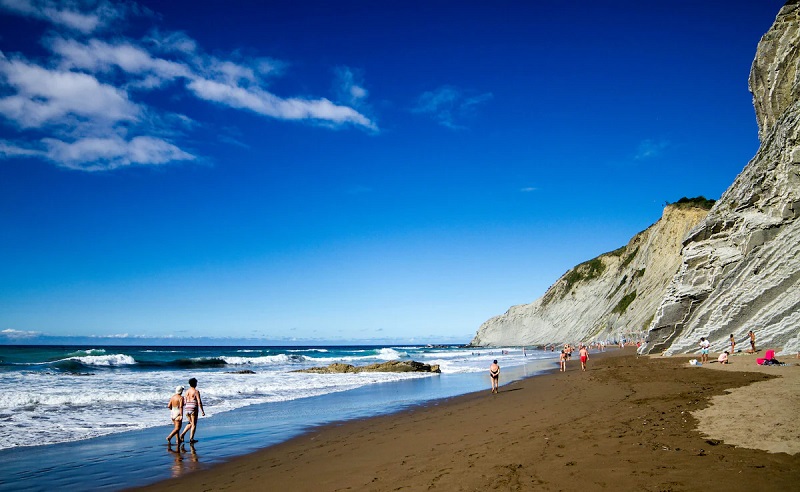
The human nervous system was never engineered to navigate endless calendar alerts, highway gridlock, and the artificial glow of dual monitors. Chronic cognitive fatigue builds quietly, manifesting as a subtle, persistent restlessness that an ordinary weekend on the couch cannot touch. When mental reserves run entirely dry, few environments recalibrate the mind as effectively as a dramatic coastline.
The rhythmic cadence of breaking surf acts as natural pink noise, slowing racing thoughts and anchoring attention in the physical present. Yet all waterfront destinations are not created equal. Crowded boardwalks, towering high-rise hotels, and beach clubs with thumping bass lines often replicate the exact sensory overload travelers are attempting to escape. A restorative seaside holiday demands a different landscape altogether: unhurried coastal enclaves where natural topography takes center stage, development remains modest, and the prevailing local currency is quiet space.
Mendocino County, California: Windswept Pacific Solitude
Three hours north of San Francisco, the California coastline sheds its suburban sprawl and transforms into a moody, theatrical meeting of land and sea. Mendocino County feels geographically disconnected from the frantic energy of the state’s southern beaches, shielded by winding stretches of Highway 1 and dense groves of coastal redwoods.
The village of Mendocino itself sits perched atop dramatic headlands, its weather-beaten Victorian cottages, picket fences, and salt-sprayed gardens evoking a nineteenth-century New England whaling port transplanted to the Pacific rim. Rather than manicured sun loungers, the coast offers rugged bluffs sculpted by churning ocean currents, hidden sea arches, and quiet driftwood-strewn coves.
Days here unfold without an agenda. You can spend a morning walking the trail loop at Mendocino Headlands State Park, watching gray whales migrate offshore while sea foam collects in deep sandstone crevices. In the afternoon, a short drive inland leads into Montgomery Woods, where cathedral-like old-growth redwoods trap cool ocean fog and mute every sound. Accommodations in the region prioritize analog comfort—think detached clifftop cottages with wood-burning fireplaces, deep soaking tubs overlooking the breaking waves, and zero pressure to be anywhere other than where you are.
Menorca, Spain: The Mediterranean’s Untamed Sanctuary
While travelers flock by the millions to Mallorca’s sprawling resorts and Ibiza’s electronic dance parties, Menorca quietly occupies the eastern edge of the Balearic archipelago as a bastion of peaceful restraint. Designated in its entirety as a UNESCO Biosphere Reserve, the island has enforced strict environmental protections for decades, prohibiting the unchecked development that transformed much of southern Europe’s coastline.
Menorca’s coastline is defined by hundreds of secluded calas—narrow limestone inlets carved into the rock, where crystalline, turquoise water remains as still as a swimming pool. Along the southern coast, coves like Cala Macarella and Cala Mitjana are bordered by dramatic white cliffs and shaded by fragrant Aleppo pine forests. The northern shore presents an entirely different, Martian beauty, with reddish sands and rugged, wind-carved stone formations around Cala Pregonda.
Connecting these hidden pocket beaches is the Camí de Cavalls, an ancient bridle path that circles the island’s entire perimeter. Walking even a short three-mile stretch reveals a landscape of dry-stone walls, grazing dairy cows, and silent olive orchards ending abruptly at dramatic sea drops. Evenings are centered on small harbors like Fornells, where family-run tavernas serve fresh spiny lobster stew alongside crisp local white wine, with nothing louder than the clinking of sailboat masts against the twilight sky.
The Alentejo Coast, Portugal: Atlantic Drama and Rural Simplicity
South of Lisbon, before the road descends into the crowded tourist corridor of the Algarve, lies Portugal’s best-kept seaside secret: the Alentejo coast. Here, the Atlantic Ocean collides with expansive plains of cork oak, rolling dunes, and steep, shale cliffs that have remained virtually untouched by mass commercialism.
Anchored around sleepy fishing villages like Zambujeira do Mar and Vila Nova de Milfontes, the Alentejo offers miles of wide, windswept beaches where you can walk for hours without encountering more than a handful of local surfers and foraging seabirds. The region forms part of the Southwest Alentejo and Vicentine Coast Natural Park, an expansive conservation zone that strictly forbids large resort complexes.
Life along this coast is governed by an unhurried, rustic rhythm:
-
Ocean walks along the Fishermen’s Trail: This world-renowned coastal path hugs the cliff edges, leading hikers past sheer sea drop-offs, nesting white storks, and hidden sandbars accessible only at low tide.
-
Unvarnished local dining: In village tascas, afternoon meals stretch across several hours. Local fishermen deliver sea bass, goose barnacles, and octopus directly to restaurant kitchens, where they are grilled over open charcoal and seasoned simply with coarse sea salt and cold-pressed olive oil.
-
Low-impact farm stays: Instead of conventional hotels, travelers stay in whitewashed rural estates known as herdades, surrounded by organic vineyards and wildflower meadows that tumble straight down to the dunes.
Vieques, Puerto Rico: Caribbean Stillness Without the Crowds
Finding genuine, slow-paced tranquility in the Caribbean often feels impossible amid the cruise ship ports and gated mega-resorts. Vieques, an island municipality lying eight miles off the eastern coast of mainland Puerto Rico, breaks that mold completely.
Because a large portion of the island was controlled by the federal government for decades before being transferred to the national wildlife refuge system, vast swathes of coastline were permanently insulated from commercial real estate development. The result is an island framed by pristine, raw beaches with zero asphalt, no beachfront bars, and not a single high-rise building.
Beaches like Playa La Chiva and Media Luna offer calm, shallow turquoise waters protected by outer barrier reefs, making them ideal for hours of effortless floating. Wild horses—descendants of Spanish steeds—roam freely across the coastal plains, often wandering down to graze near the palm fringes. At night, the island offers an encounter with one of nature’s most surreal wonders: Mosquito Bay, recognized globally as one of the brightest bioluminescent bays on Earth, where microscopic dinoflagellates illuminate every paddle stroke in vivid neon-blue light beneath an ink-black sky.
Midcoast Maine: Maritime Heritage and Granite Sanctuaries
For travelers who equate coastal relaxation with crisp maritime breezes, wool blankets, and the scent of wild balsam rather than tropical humidity, Maine’s Midcoast provides an ideal northern escape. Between Casco Bay and the entrance to Penobscot Bay, the coastline fractures into a labyrinth of granite peninsulas, secluded harbors, and spruce-covered islands.
Towns like Camden, Rockport, and the quiet artist enclaves of Deer Isle move at a contemplative pace shaped by tides and maritime trades. You will not find sprawling sandy beaches here; instead, the shoreline is composed of smoothed granite ledges that warm in the afternoon sun, providing front-row seats to traditional wooden schooners cutting through the deep blue water.
Mornings typically begin under a quiet blanket of coastal sea fog that dampens the world into total stillness, burning off by midday to reveal sharp, sapphire skies. Visitors spend their hours exploring working lobster wharves, browsing independent bookstores tucked inside clapboard storefronts, or chartering an afternoon sail to watch harbor seals bask on tidal ledges. It is a destination that invites quiet reflection, warm cider by the fireplace, and the restorative pleasure of simple, well-crafted surroundings.
How to Protect the Calm of a Coastal Getaway
Selecting a peaceful destination is only half the battle; how you structure your time determines whether you return home genuinely refreshed.
To safeguard your mental reset, resist the urge to turn your trip into an athletic checklist of sightseeing stops. Choose accommodations with a direct visual or auditory connection to the water, whether that is a stone terrace overlooking a cove or a cabin where the surf is audible through open bedroom windows. Wake naturally with the sunrise rather than an alarm, keep electronic devices stowed out of sight, and allow the prevailing tides to dictate your daily movement. A truly relaxing coastal escape is not about seeing everything a region has to offer; it is about finding a singular, beautiful corner of the shoreline and staying still long enough to let the saltwater do its work.