

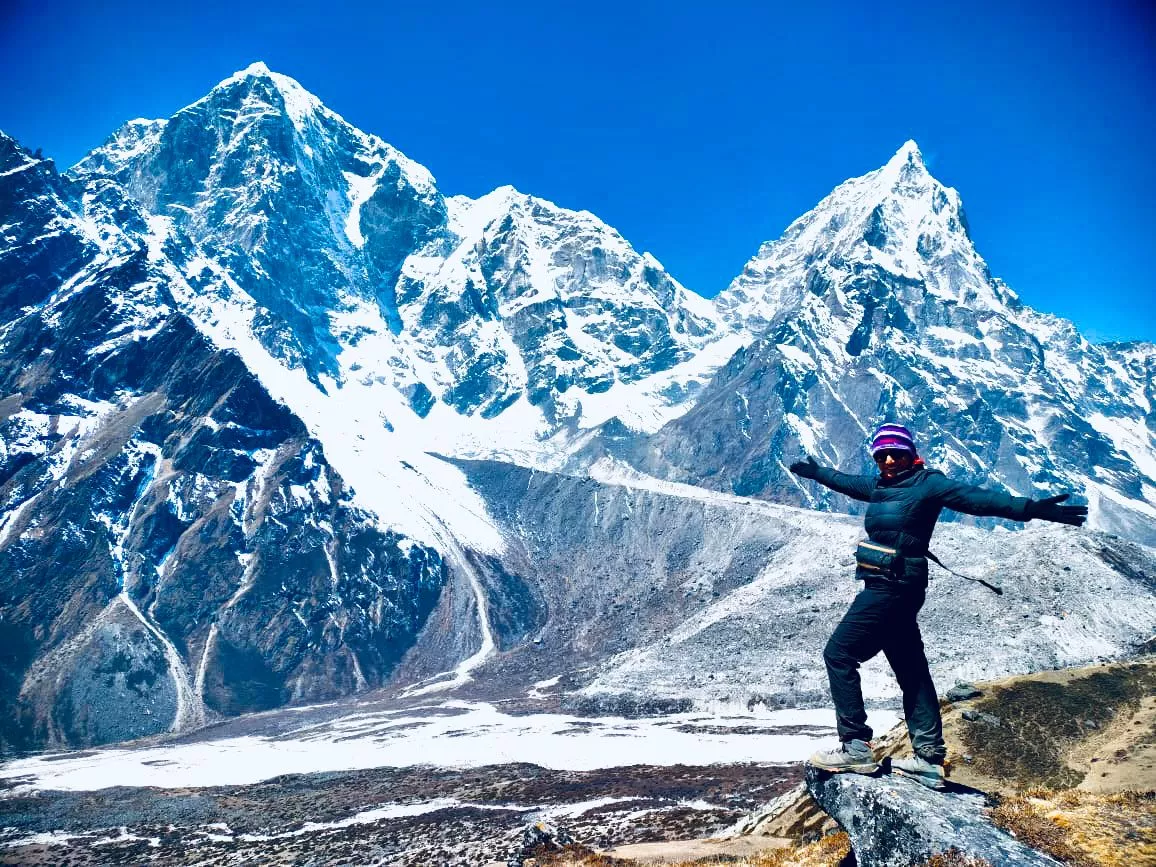
EBC Trek has never been just a hiking adventure for me. It’s a dream, a grand odyssey that promises stunning vistas, cultural experiences, and an even closer relationship with nature. I had trained on and off for the trek, and I knew it would test my physical and mental limits, but I was also lured by the prospect of standing at the base of the world’s highest peak: Mount Everest.
It all started in Kathmandu, where the hustle and bustle of the streets, colorful food markets , and ancient temples reminded me that I was a long way from home. After a month in the city, the loud urban noise was an oxymoron for the mountain silence I would soon experience. I flew from Kathmandu to Lukla, a little town that serves as the jumping-off point for the trek, and the anticipation was in the air. The flight to Lukla is known for its wild approach, with the small runway surrounded by mountains. Once on land, the true adventure started.
The journey itself can be an endurance challenge, not just physically but mentally too. The days were long and full of steep climbs, rocky trails, and narrow bridges. Every day the air grew thinner. With it, the challenge of high-altitude hiking revealed itself. With every step becoming slightly more strenuous due to the lack of oxygen, though, it was the camaraderie of fellow trekkers, combined with the support of guides and porters, that kept me moving forward.
Days spent in Namche Bazaar, the gateway to Everest, were among the most memorable parts of the trek. It was easy to see why so many trekkers stop here to acclimatize, with gorgeous mountain views and an enviable Sherpa culture. The colorful prayer flags of the traditional Sherpa villages, the Buddhist monasteries and the good people surrounded me in a very sense of wonder and awe. Day by day, I was edging toward Everest, like the mountain was bringing me to my destination.
It certainly was a physical challenge. There were times when the altitude slowed me down, and tiredness kicked in. But there was an unspoken rhythm to that trek that carried me along — one foot after the other, toward the next step. The guide and porter really helped me along the way. They not only helped me carry that burden, but shared their knowledge and tales of the mountains, buoying my morale when it felt like I could never climb higher.
When I finally arrived at Everest Base Camp, the emotions came flooding in. And standing at the foot of Everest, beset by glaciers and the Khumbu Icefall, was like an out-of-body experience. The moment couldn’t have been more special because of the immense mass and majesty of the mountain, its peak, and the quiet of the surrounding area. I had achieved what many only dream of, and the fulfillment was indescribable.
But the journey didn’t stop at Base Camp. The descent was, of course, another challenge, but felt like an opportunity to reflect. I was reconciling the experience, the physical exhaustion, the stunning beauty, and the emotional bond I had created with the mountains and people that I had all of a sudden come to know.
Ultimately, the EBC Trek was so much more than arriving somewhere—it was about the not arriving. It was one of self-discovery, endurance, and exquisite beauty. The journey behind me transformed every aspect of my life up to that point and I’d carry those changes with me until my last breath. The Odyssey to Everest was not only a physical challenge; it was an experience that will be imprinted on my heart for eternity.
Introduction: Starting the Journey of a Lifetime
From the moment I decided on the Everest Base Camp (EBC) Trek, I knew I was undertaking a life-changing experience. The journey was guaranteed a workout but, even better, a chance to explore the grandeur of the Himalayas, experience ancient cultures, and test my own limitations. The journey to Everest Base Camp started long before I ever stepped foot in the country of Nepal, it started with a dream, a goal and a drive to make it happen. With anticipation, nerves, and excitement in my heart, I headed out from home because I knew this would be no ordinary adventure.
The Dream of Everest: Why I decided to trek
Everest Base Camp Trek For Beginners For centuries, explorers and adventurers have been drawn to the magnetism of Mount Everest. I stood on Everest Base Camp, dreaming born from a love for the mountains and a love for nature. The thought of hiking to the base of the tallest mountain on Earth was the epitome of a dream come true, the ultimate experience, a feat of both physical endurance and mental strength. It was stories about the previous trekkers who experienced this same journey that made me feel in awe, and motivated me to take that first step. The true desire was to experience the majestic landscape, the Sherpa culture, to achieve such a monumental feat.
Get ready for the trek: Fitness and mental preparedness
It’s Not an Easy TrekPreparation for the Everest Base Camp trek The trek would take a toll on my body so I trained from the very start to ensure that I was in top condition, building the strength, endurance, and stamina needed for the steep climbs. Hiking with a pack that was loaded, running and regular leg and core exercises trained my body to the stress. Physical preparation alone, though, wasn’t sufficient. So was mental preparation. I needed to emotionally brace myself for the uncertainty of hiking at high altitudes, challenging weather conditions, and fatigue. On top of that, I had to reconcile that some days would be grueling, and that the journey would push me like no other journey ever had. It was a mix of physical and mental preparation that guaranteed I would be prepared for the test.
The Journey Starts: Arrival in Kathmandu
It felt surreal arriving in Kathmandu. The city’s crazy energy, busy streets and colorful temples served as an introduction to the adventure that awaited. Driving through the narrow alleys and bustling bazaars, I felt a jolt of excitement and curiosity for the culture I was about to enter, while Kathmandu’s blend of tradition and modernity couldn’t be more different than the tranquility and simplicity of the mountains I was on my way toward. That was how my journey towards Everest Base Camp started — one that I felt was opening right up to a new world of exploration and adventure.
Lukla Flight: The Beginning
Everest Base Camp Trek Safety Tips The flight from Kathmandu to Lukla was one of the most thrilling I’d ever experienced. The small plane, filled with trekkers, flew across the Himalayas and offered breathtaking views of snow-covered peaks. As we approached Lukla, the pilot executed an exhilarated best part was the approach, heart stop landing on a tiny, sloping runway that seemed too short for the plane to for by this plane. The adrenaline of this special flight paled in comparison to the thrill of embarking on the trek. Lukla, with its plethora of shops, soulful little guesthouses, and bustling airstrip all but confirmed that the adventure was well and truly underway and that the reality of the EBC Trek was about to close in on us.
Day 1-3: The Splendour and Struggles of the Path to Namche Bazaar
The first couple of days of the hike were as much about beauty as they were about pain. The trek started in Lukla and meandered through verdant forests, crossed suspension bridges over mile-high roaring rivers, and walked past undeveloped little Sherpa villages. The altitude was immediately apparent, and the trek seemed harder than I’d expected. The air thinned as we climbed, each step growing heavier. THE LANDSCAPE WAS STUNNING, however—the snow-covered peaks in the distance and every corner turning more and more amazing. Arriving at Namche Bazaar after three days was a huge achievement. This thriving settlement on the mountainside is known as the “Gateway to Everest” and served not only as a nice respite but also as a perfect acclimatization opportunity.
Namche Bazaar: Getting Acclimatized to the Altitude
Guided Everest Base Camp Trek Namche Bazar at 3,440 meters (11,286 feet) was the first real stop on our trail where the effects of altitude started to become apparent. This busy town of Sherpas, sandwiched between craggy peaks, is an ideal spot for acclimatization. It was important to spend a day here to let our bodies get used to the thinner air before we trekked higher up into the Himalayas. On acclimatization days, we took shorter hikes to help our bodies adjust, including one to the Everest View Hotel at 3870m, which served us with 180° of spectacular views of Everest, Lhotse, and other surrounding peaks. I may have been a little winded, but I could tell my body was slowly acclimating to the altitude. I learned the importance of taking it slow, drinking lots of water, and listening to my body because at higher altitudes, many trekkers struggle with altitude sickness.
The Spirituality of Tower Monasterydence of interpretation.
After leaving Namche, we trekked in the direction of Tengboche, whose monastery, Tengboche Monastery, is one of the most famous in Nepal. It is perched at an altitude of 3,860 meters (12,664 feet) and serves as a spiritual hub for trekkers and locals. The prayer flags flapped in the breeze, and the monastery was an oasis of peace. As we entered, we were met with the tranquil sounds of Buddhist chanting and the sight of monks praying in their orange robes. The monastery serves as both place of worship, and a beacon of hope and survival in the extreme condition of the Himalayas. Visiting the Tengboche Monastery helped me recreate the sense of the meaning of the trek as it brought to the forefront that this trek was not only about physical endurance but also about the spiritual layer that covers the area.
A Last Push To Dingboche, And Fatigue Hits Jet Lag
Dingboche at 4,410 meters (14,468 feet) was another big milestone on the trek as we kept going up. The mountains were rising around us, and the oxygen was thinning; each step became a matter of fortitude. At this point, I was beginning to feel the full weight of the trek. I was tired in my body, and the exhaustion of long days of walking began to catch up with me. But the breathtaking beauty of the scenery — stone wall fields, towering peaks in the distance — kept propelling me onward. Day 9 — Dingboche We had another acclimatization day in Dingboche that relieved some of the pressure of altitude and allowed me to rest. It was a moment that forced me to dig deep, to go beyond myself, because every step was a step closer to the prize — Everest Base Camp.
The Last Push: Ascending to Everest Base Camp
The last segment of the trek to Everest Base Camp was the hardest, as we hiked the distance from Lobuche to Gorak Shep and then made the last push to Base Camp. As we got to higher elevation areas the terrain grew rougher and trickier. With every step, the freezing temperature and thin air left me gasping for breath, but my fixation drove me forward. Just seeing Everest Base Camp in the distance made it all worthwhile. I was overwhelmed with excitement and nervousness, feeling that this was the moment I had always dreamed about. It was an extremely empowering moment, standing at the gates of Everest after so many days of hard trekking and knowing that I had made it so far. That was one of those moments where time dilates, and I let myself take in that I had made such an achievement.
Standing at Everest Base Camp: A Moment of Life Transformation
So the day started: finally I reached the Everest Base Camp at an altitude of 5,364 meters (17,598 feet), surrounded by astonishing views of the Khumbu Icefall and majestic peaks. The moment was overwhelming. My eyes brimmed with tears as I gazed around at the immensity—a vista that words failed to convey. After days of hiking through rugged, high-altitude terrain in fading light, and against fatigue, getting to this iconic destination was a moment of deep satisfaction. Base camp was charged with energy, with trekkers from around the world swapping tales of endurance. As I looked into the majestic views of Everest I felt so grateful just for the experience, the beauty of the Himalayas and that I had done something quite so incredible.
With This Year Now Behind, A Great Trek, A Great Learning, and A Glorious Horizon
Walking back downhill, I reflected on the lessons I learned over this trek. The physical challenges, the spiritual moments, the breathtaking scenery — they all came together to change me for ever. What I learned was patience, perseverance, and being resourceful, with the ability to slow down and enjoy the journey not just the destination. The EBC trek reminded me that the best things in life are usually achieved after going through some of the hardest times. It was so much more than reaching the Base Camp, it was the transformation along the journey, and I knew I would take these experiences with me forever.